Dreaming Wide: Uwade and the Quiet Power of Black Girlhood
Tracing the quiet revelations, ruptures, and rituals that formed her music.
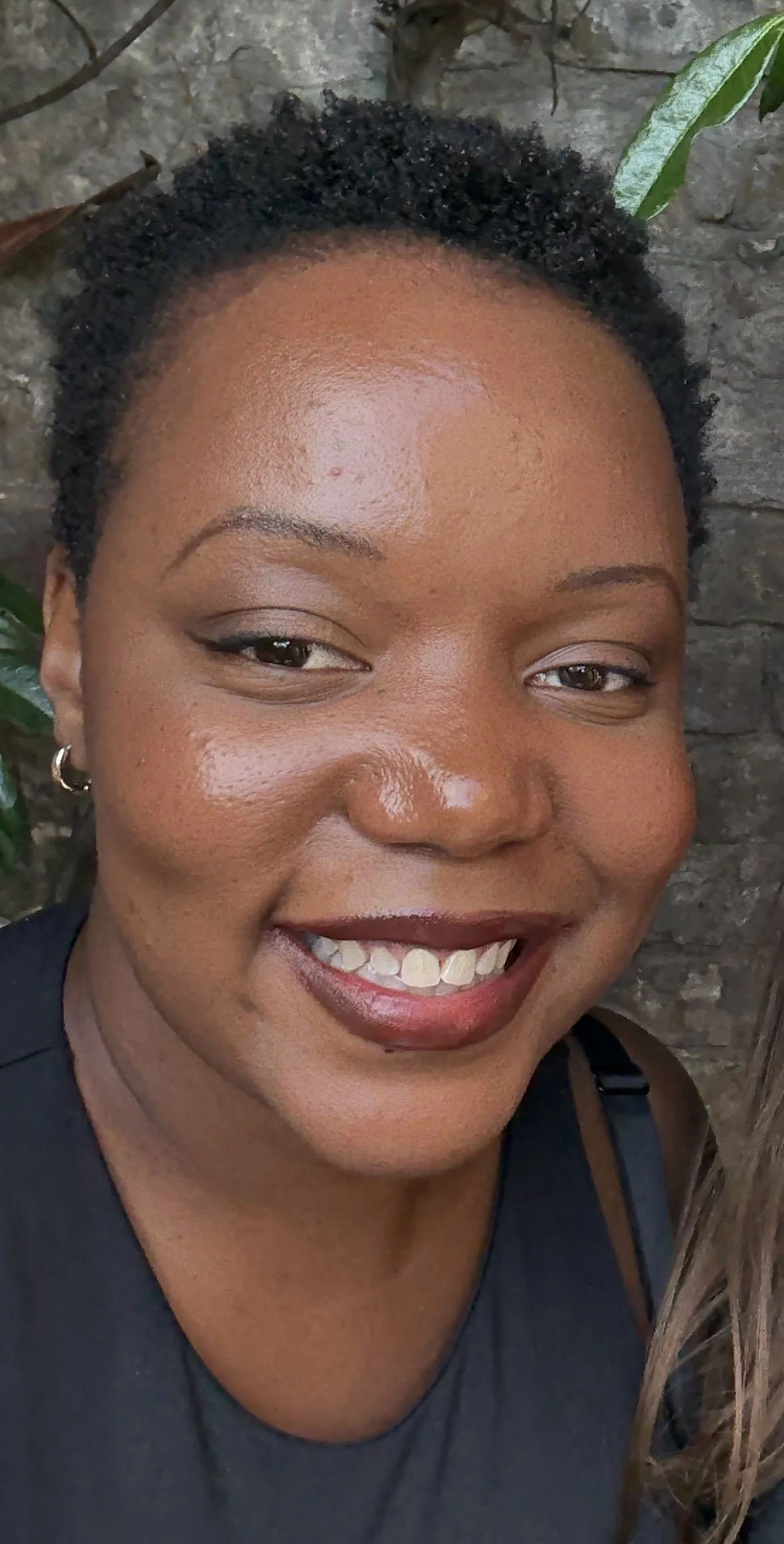
There was a stretch of childhood when I felt as though I was moving through the world entirely alone. I was four, newly transplanted from Zimbabwe to the UK, carrying only a thin grasp of English and an accent that made even that feel precarious. My parents like to remind me of how mesmerised I was by London’s red buses - their size, confidence and their impossible brightness. Even now, I’ll choose a bus over the Tube every time: a small act of fidelity to that earlier self.
Assimilation arrived quickly or at least appeared to. For immigrant children moved across continents at an awkward linguistic phase, English becomes the mighty currency, not out of shame, but out of strategy, a means of crossing into a new social reality. It was fast, yes, but never seamless. I spent time with a white family whose children attended my school, and their daughter - my first and only bully, a role I refused to let anyone else inherit - attempted to recruit me into supporting Chelsea through sheer sonic force. She chanted the club’s anthem at me repeatedly, an indoctrination-by-auditory-assault I resisted with all the stubbornness a four-year-old can muster. The fact that I still remember the chant feels like its own small violence.
Aside from that torrid refrain, when I look back, that period was overwhelmingly quiet. Before English lived comfortably in my mouth, I existed mostly in observation—listening, reading, absorbing. I was learning the textures of this new world by watching it from the inside of myself. My interior life felt calm, almost suspended, a space I could retreat into while everything else shifted around me.
It’s only now, thinking through Black girlhood with a different attentiveness, that I understand that quietness as something more than shyness or transition. It was an early form of interiority, a kind of emotional architecture I was building without language. People might consider me a social force now, but that earlier version of myself - soft(ish) and still observant - remains alive and very present.
Much of the writing about girlhood today leans into a familiar iconography: softness bathed in sunlight, pastel nostalgia, the delicate melancholy of being young and white and untroubled by the world’s gaze. But Black girlhood rarely receives the same cultural tenderness. Yet Black girls carry entire universes inside them, shaped by language & power, diaspora, migration, the dual pressures of invisibility and visibility - many of which are soundtracked.
My conversation with singer-songwriter Uwade has inspired this reflection—especially the way she spoke about her girlhood as a study in independence, play, and early self-possession. I kept returning to her mother’s words: go off, do your own thing, and those meant for you will come. That quiet instruction toward interiority feels like a thread that runs through everything she makes.
Her debut album Florilegium is one of my favourites of the year. Make sure to listen to it!
Read our chat below.
-Michelle
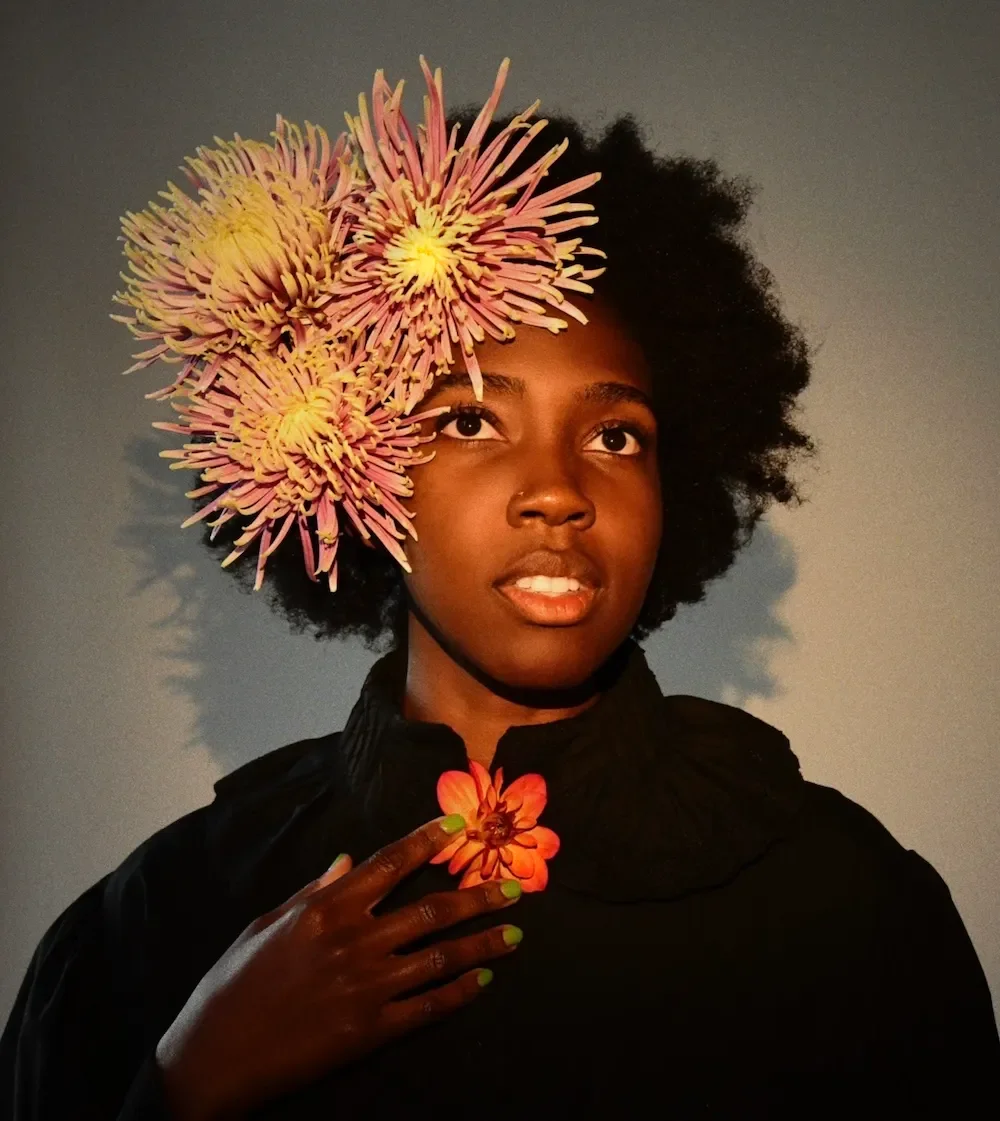
Uwade, 2025
There is a moment many Black girls recognise long before anyone names it for us: the moment you realise you must become your own company. For Uwade, that moment arrived in childhood, not as loneliness but as a surprising form of power. She grew up an only child, a gregarious, curious one, - overflowing with intensity.
But she was often mystified by the fact that her childhood friends didn’t always want to play. One afternoon, her mother passed down a line that feels almost like a secret inheritance of Black girlhood: “If they don’t want to play with you, don’t worry. Go off and do your own thing. You’ll see—everyone will come to you.” It was a cheat code and a permission slip to be herself. It became, in many ways, her first lesson in autonomy—the inwardness Black girls often cultivate out of necessity, and the quiet conviction that your spirit will attract who it needs.
Music, at first, wasn’t an identity or a craft. It was a medium of connection. She sang in choirs; she memorised pop songs to trade with friends; she lived on Tumblr, harmonising across the screen with other One Direction devotees. The point wasn’t analysis but feeling. “Whatever song made me feel that thing that arrested me,” she says, “that was enough. It didn’t matter if it was Dolly Parton or Fela Kuti…or Taio Cruz.”, she laughs.
But the deeper formation was happening elsewhere. Uwade’s mother owned a braiding shop—one of those intimate, humming cultural hubs where Black women gather to transform themselves while talking, laughing and remembering. Uwade grew up inside that space, learning Lingala songs, hearing stories, absorbing the rhythms of Francophone and West African life. She was a little show-off, she admits now, emerging from the back room to serenade the women in French. Music wasn’t something she performed for approval but the atmosphere she breathed.
There were other atmospheres too. Gregorian chants she practised with her father after church. Afrobeats that wrapped her visits home to Nigeria. The unexpected tenderness of Dolly Parton, whom her mother loved but never mentioned until directly asked—because, as many of us know, African parents rarely volunteer the soft material of their pasts. Uwade learned to make her own archipelago of influences, not out of curation but out of desire.
There were fractures in her adoloscence also. Growing up in predominantly white schools in the American South, she felt the sharp edges of desirability politics long before she had the language for them. “I was boy-crazy,” she laughs, “but I didn’t understand why the boys weren’t crazy about me.” That double consciousness—the self you are and the one the world distorts—became another layer of her interior life, another reason to turn inward, to cultivate a self not contingent on recognition.
College expanded the map again. Amongst other bands (The Strokes; Fleet Foxes), Vampire Weekend arrived with their melodic hooks and complicated cultural proximities, offering a strange but sincere bridge between her worlds. Toni Morrison entered, reshaping her sense of narrative. And then there were the mystics—Julian of Norwich, Thomas Merton, St. John of the Cross—writers whose ecstatic relationship to the divine taught her that interiority could be expansive, cosmic even. “Creating your own world inside a rigid structure,” she says, “felt freeing.”
But perhaps the biggest shift came when she crossed the Atlantic. Her year studying in the UK changed her. “Part of my soul was forged there,” she tells me. London felt closer to Nigeria - not geographically, but spiritually. Diaspora has its own cartography, one measured not in miles but in resonance. The rain slowed her down, and the melancholy suited her; the pensive quiet made space for her artistry. “When I’m there, I become the best version of myself,” she says.
Time, for Uwade, is not linear. It folds. It loops. It revises itself. Memory is its own generative field—part truth, part invention, part emotional logic. She writes from that place, not to document events but to distill them. “I start with the personal,” she says, “then widen it. The ultra-personal can be compelling but also limiting.” Her music becomes a space where the self is porous—infused with other people’s stories, other versions of herself, other possible worlds.
If there is one message she would send back to her younger self, it is this: do not deny any part of yourself. The pressure to be “smart,” to choose a respectable path, to treat your gifts as accidents rather than callings—she would undo all of that. “Life is much wider than the tracks you put yourself on,” she says. Dream wide and broad.
Maybe that is the quiet thesis of Uwade’s work: that Black girlhood is not just survival or self-invention, but a widening, from the self, first. A refusal of narrowness. A commitment to feeling deeply, remembering expansively, and shaping a world capacious enough for all the selves we have been.
Originally published in black radical. Reprinted with permission from the author.